Tuesday, October 28, 2014

Week Nine: The Black Plague

Common Name: Black Plague, Bubonic Plague

Scientific Name: Yersinia pestis

Not-So-Fun Fact: Yersinia pestis is the bacterium which causes bubonic plague, and was briefly discussed in association with the Oriental Rat Flea. This bacterium builds up in the gut of the flea and causes it to regurgitate the colony into the bloodstream of its victim, spreading the disease. Bubonic plague can cause swollen lymph nodes, necrosis of the flesh, weakness, chills, and death.


Black Plague

Yersinia pestis

Domain: Bacteria

Kingdom: Prokaryotae

Phylum: Proteobacteria

Class: Gammaproteobacteria

Order: Enterobacteriales

Family: Enterobacteriaceae

Genus: Yersinia

Species: Y. pestis

Description: The bacterium itself is a rod-shaped organism that lives in the gut of a flea. For the description of the flea, see Week Five: Oriental Rat Flea.

Environment: The area of the United States inhabited by the hosts of this bacterium is primarily rural areas west of the Rockies. The bacteria usually circulate in an enzootic system among rat and flea populations, spreading to other species only occasionally. Humans usually contract the disease from flea bites contaminated by the pathogen. Once present in the human body, the bacterium moves from the bloodstream to the lymphatic system, where it causes the formation of buboes.

Reproduction & Development: This bacterium undergoes asexual reproduction through the process of binary fission. This quick, simple method of reproduction allows the infamous technique of “blocking” the gut of a flea with the bacterial colony, which forces the partial regurgitation of the colony into the bloodstream of the flea’s victim. During the bacterium’s development it may be passed between fleas and their mammalian hosts many times.

Nutrition: The Black Plague bacterium is a parasite that feeds primarily on fleas and their host rodents, using fleas—usually the Oriental Rat Flea—as a carrier. Rats are the main hosts, but many other species may fall victim to the organism, including squirrels, mice, and chipmunks. Humans are not the preferred host, and especially not for the fleas, but when sudden die-offs of rats occur, the fleas have no choice but to feed off of humans, thus spreading the bacterium to humans. Yersinia pestis is known as a chemoheterotroph, which refers to its reliance on foreign organic molecules for nutrition.
 

Sunday, October 26, 2014

Week Eight: Nile Crocodile

Common Name: Nile Crocodile

Scientific Name: Crocodylus niloticus

Fun Fact: From birth, Nile crocodiles are voracious carnivores who will kill and devour any living prey in their vicinity by biting and/or drowning the unfortunate creature.


Domain: Eukaryota

Kingdom: Animalia

Phylum: Chordata

Class: Reptilia

Order: Crocodylia

Family: Crocodylidae

Genus: Crocodylus

Species: C. niloticus

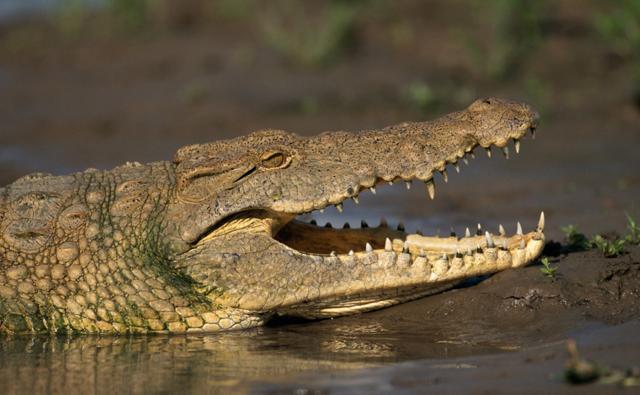
Description: The Nile crocodile is the largest reptile in Africa, at twenty feet in length and weighing more than 1,980 pounds. Its head tapers to a triangular snout, and its scales are for the most part olive green, with a yellowish underbelly and mouth.

Environment: This species of crocodile can be found in almost any amicable habitat in Africa, from the Nile River to Madagascar. It requires a ready body of freshwater and is therefore vulnerable to drought. It may briefly survive in saltwater estuaries, such as the Nile delta, but prefers rivers, lakes, waterholes, and reservoirs.

Reproduction & Development: During the dry season, Nile crocodiles breed and the females lay anywhere from 25 to 100 eggs. The female guards and cares for these eggs until they hatch, at which point she will assist in their escape from their eggs and lead them to the water. The female crocodile is a caring mother, who guards her offspring carefully from predators of all species, including her own. These offspring will become sexually mature at 7 to 15 years of age and live for up to 100 years.

Nutrition: Nile crocodiles are carnivores and eat nearly any animal prey available, including large game and juveniles of its own species.

Tuesday, October 14, 2014

Week Seven: Mala Mujer

Common Name: Mala Mujer

Scientific Name: Cnidoscolus angustidens

Not-So-Fun Fact: Mala mujer translates from the Spanish into "bad woman" and refers to the nettle-like stinging hairs combined with toxic sap that cause a painful, inflamed rash on the skin of anyone who comes into contact with the plant.


Domain: Eukaryota

Kingdom: Plantae

Phylum: Magnoliophyta

Class: Magnoliopsida

Order: Euphorbiales

Family: Euphorbiaceae

Genus: Cnidoscolus

Species: C. angustidens

Description: Mala mujer is a two-foot-tall perennial shrub that sports diminutive white flowers. Its white-spotted leaves are covered in fine nettle-like hairs that inject themselves into the skin. Despite these needle-like hairs, mala mujer is classified not as a nettle of the Urticaceae family but a toxic-sap-spurting spurge of the Euphorbiaceae family.

Environment: Mala mujer is generally found in the Sonoran desert of the southern United States and northern Mexico. It prefers hot and very dry climates.

Reproduction & Development: Mala mujer is a flowering angiosperm, which means it reproduces using flowers that must be pollinated and must turn into fruits. This form of reproduction is sexual.

Nutrition: Mala mujer requires very little water or nutrients but much sunlight, as it is a desert plant. Its roots are succulent, which means that they retain much water for the plant underground.


Wednesday, October 8, 2014

Week Six: Ergot

Common Name: Ergot

Scientific Name: Claviceps purpura

Not-So-Fun Fact: If ingested due to their presence in rye bread, ergot spores can lead to ergotism, a type of poisoning that constricts blood vessels. The symptoms of this condition include seizures, nausea, hysteria, hallucinations, burning sensations on the skin, and, if left untreated, gangrene and death.

Domain: Eukaryota

Kingdom: Fungi

Phylum-Ascomycota

Class-Sordariomycetes

Order-Hypocreales

Family: Clavicipitaceae

Genus: Claviceps

Species: C. purpura

Description: Ergot parasitizes rye grass, and manifests as a hard growth called a sclerotium that exactly mimics a stalk of rye.

Environment: Ergot is found attached to rye in temperate regions. The fungus prefers a chilly, damp environment.

Reproduction & Development:  Ergot is capable of reproducing sexually or asexually, and grows from spores released by the parent fungus. Ergot attaches itself to a neighboring rye plant. Once attached, the fungus grows into a new imitation of the host plant and releases its own spores.

Nutrition: Ergot feeds off of its host cereal grain plant, leeching nutrients from the real rye stalk it has mimicked.
 

Wednesday, October 1, 2014

Week Five: Oriental Rat Flea

Common Name: Oriental Rat Flea

Scientific Name: Xenopsylla cheopis

Not-So-Fun Fact: Oriental rat fleas are the primary host of the bacterium Yersinia pestis, which when introduced into the human bloodstream causes bubonic plague. At dozens of instances in human history, the fleas have bitten and infected individual humans and in turn created massive epidemics of the plague in Asia, Africa, and Europe.

Domain: Eukaryota

Kingdom: Animalia

Phylum: Arthropoda

Class: Insecta

Order: Siphonaptera

Family: Pulicidae

Genus: Xenopsylla

Species: X. cheopis

Description: Oriental rat fleas have flattened, bulbous bodies and long, powerful, hairy legs. They are the usual semi-translucent brown color common among fleas. Their mouthparts are specifically adapted for the ingestion of blood, and are very complex. Their digestive tracts are easily blocked by bacterial masses.

Environment: Both this species of flea and its deadly parasite originated in central Asia, specifically in Mongolia and China. The flea is now found wherever its primary host, the rat, can be found. Other, less preferable hosts include cats, dogs, chickens, and humans.

Reproduction & Development: Like many more benign insects, Oriental rat fleas go through four main life cycle stages. After two to twelve days, the egg hatches into a larval form. The larva will go through three molts before spinning a cocoon and becoming a pupa. The flea then emerges as an adult. Any one of the temporary stages may be prolonged by environmental factors, and indeed the speed of pupal development is entirely dependent upon its surroundings.

Nutrition: The flea survives off of the blood of its host, which is sucked through its sharp proboscis. This process is sometimes hindered by the large quantities of plague bacteria which can block the gut of the flea and eventually starve it to death after a period in which the flea bites as many host animals as possible in its desperate quest to properly slake its thirst for blood.


Tuesday, September 23, 2014

Week Four: Oleander

Not-So-Fun Fact: All parts of the oleander shrub have been infamous since classical times as a lethal poison.

Common Name: Oleander

Scientific Name: Nerium oleander

Domain: Eukaryota

Kingdom: Plantae

Phylum: Magnoliophyta

Class: Magnoliopsida

Order: Gentianales

Family: Apocynaceae

Genus: Nerium

Species: N. oleander

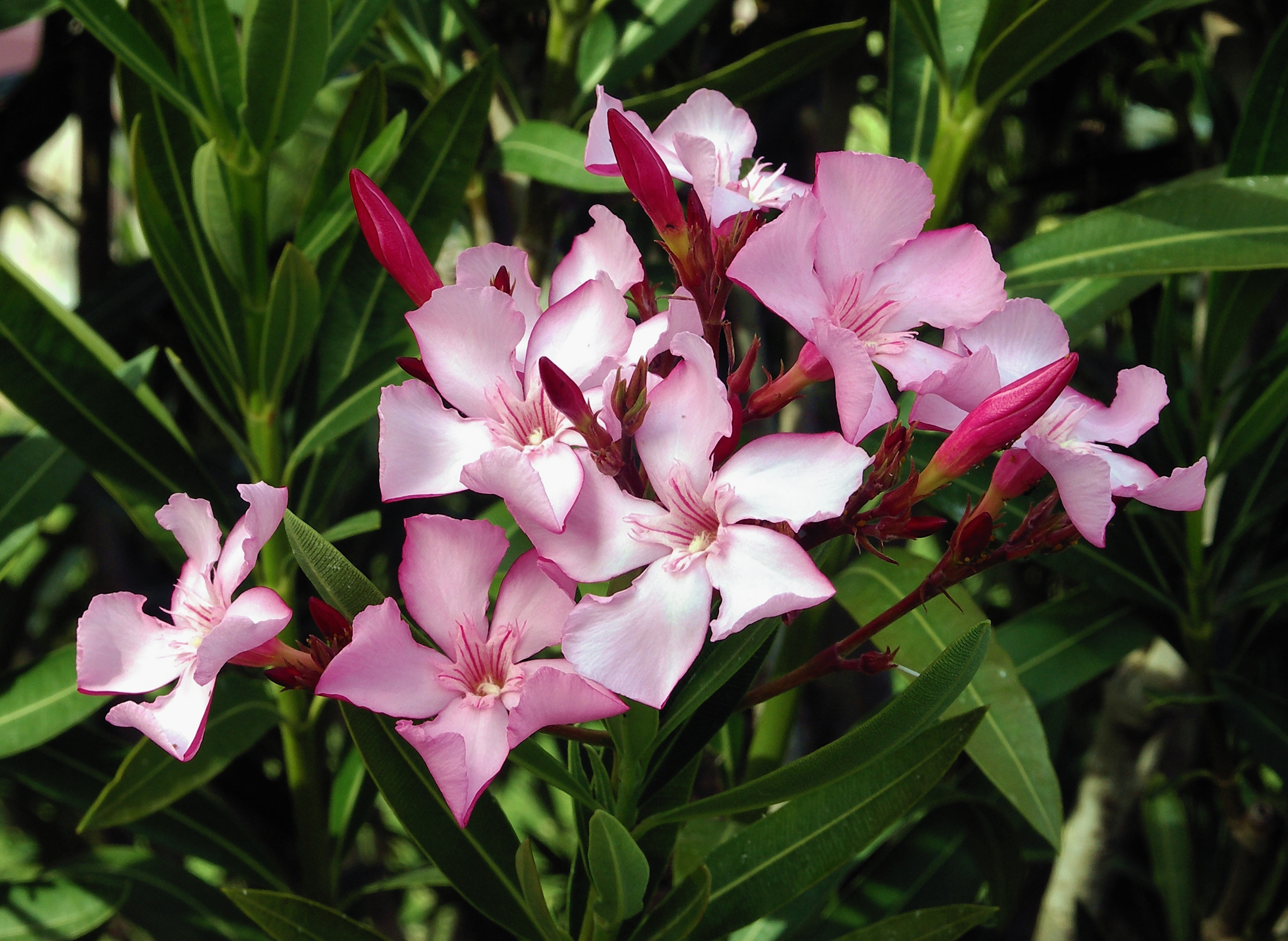
Description: Oleander is a large woody-stemmed shrub covered by five-petaled blossoms in shades of red, yellow, pink, or white. All parts of the plant contain oleandrin, a cardiac glycoside named after the plant.

Environment: Oleander prefers warm, dry, sunny climates in temperate and tropical regions across the globe. It originated in the Mediterranean, where it was described by such prominent naturalists as Pliny the Elder.

Reproduction & Development: Oleander is an angiosperm, which means that it reproduces sexually by way of pollination of its flowers. It is capable of self-pollination, which is fortunate, since oleander is rarely visited by its insect pollinators. Those flowers that are pollinated produce spores that disperse themselves, and from these grow new shrubs. Oleander is a perennial evergreen.

Nutrition: Oleander prefers dry, sunny locations, though the young seedlings do require more water than the adults. Like all plants, it uses photosynthesis to produce sugars, which are stored in the plant; and oxygen, which is released as a waste product.
 

Monday, September 15, 2014

Week Three: Zaire Ebolavirus


Not-So-Fun Fact: This particular organism is currently wreaking havoc in Liberia, Guinea, Nigeria, and Sierra Leone. Therefore, let us understand it further by its biological characteristics.

Common Name: Zaire Ebola Virus

Scientific Name: Ebolavirus zaire

Ebola is known to be a virus. The classification of a virus as an organism is currently being debated among biologists and taxonomists. The taxonomy pertaining to Zaire Ebolavirus is listed below, after the grouping Virus.

Class: ssRNA negative-strand viruses

Order: Mononegavirales

Family: Filoviridae

Genus: Ebolavirus

Species: E. zaire

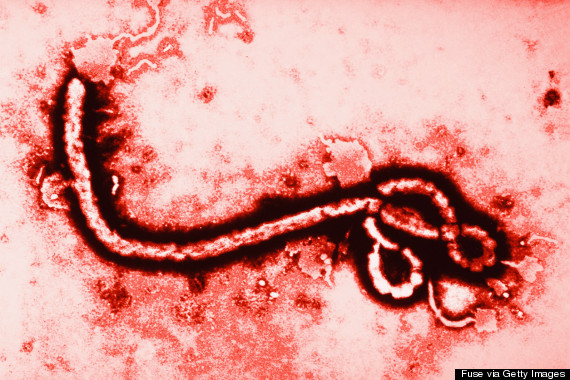
Description: The virus itself is encapsulated by a membrane built from the stolen cell membrane of its parent’s host cell. Inside this membrane is a set of nuclear proteins and a single string of RNA—the precursor to DNA—which documents the virus’s genetic code. The viral capsule measures 920 nanometers in length and 80 nanometers in diameter.

Environment: Ebolavirus must inhabit a host animal. It is found in the host’s bodily fluids. Its natural host is the fruit bat of the Pteropodidae family, but primates, including humans, have become accidental hosts. Many other animals have also been found to carry Ebola Virus Disease.

Reproduction & Development: Ebolavirus reproduces by invading an animal cell and stealing phospholipids and proteins to duplicate itself. The new ebolavirus units escape into the rest of the host to do the same to other cells. In humans the incubation period of Ebola is 2-21 days.

Nutrition: Ebola, like many viruses, feeds off of its host. It steals material from the cells of its host to help itself grow and replicate. The host cell’s cell membrane is especially damaged in the virus’s feeding frenzy.